Watercolor Forest Trees Clipart: Versatile Pine Designs
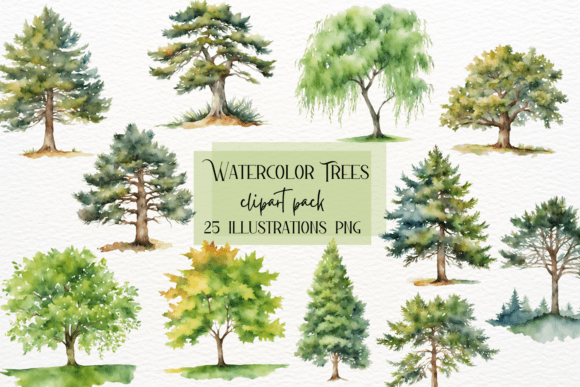
If you have ever searched for nature-inspired visuals that feel both polished and approachable, you have likely come across the Watercolor Forest Trees Clipart, Pine set. This collection of watercolor pine tree illustrations strikes a balance between artistic texture and practical usability. The soft, organic edges and subtle color gradients give each tree a hand-painted feel, while the clean silhouettes keep the assets easy to layer, resize, and integrate into digital layouts.
What makes this clipart set stand out is not just the visual appeal but the range of applications it supports. Whether you are designing a brand identity for a wellness startup, building a website for a national park outfitter, or creating social media templates for a sustainable lifestyle blog, these pine trees can anchor a scene without overwhelming it. The watercolor style imparts a gentle, natural warmth that photographs sometimes lack and that vector-only illustrations often miss.
Visual Characteristics and Style Personality
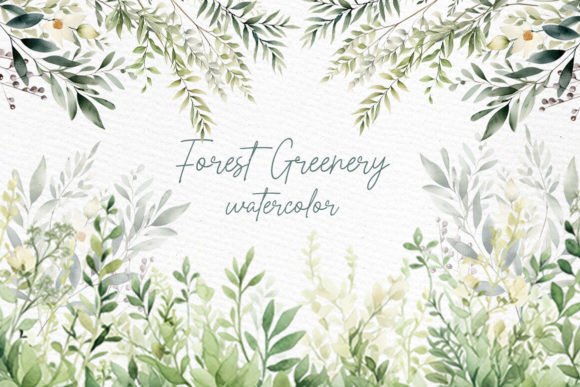
The Watercolor Forest Trees Clipart, Pine assets are characterized by soft washes of green, blue-green, and earthy tones. The paint-like bleeding at the edges creates a sense of depth and movement. Each pine tree has a slightly different shape and color density, which means you can arrange them in groupings that feel organic rather than templated. This variation is a key advantage for designers who want to avoid the stiff, repetitive look that can come from using uniform icons.
From a personality standpoint, this clipart leans into calm, grounded, and organic emotions. It pairs nicely with modern typography, especially a clean sans serif font for headings or a subtle handwritten font for accent text. The watercolor texture also complements serif font pairings in editorial layouts, where the contrast between structural type and fluid art adds visual interest.
Where This Clipart Works Best Across Projects
One of the first places I see Watercolor Forest Trees Clipart, Pine used effectively is in logo design for nature-focused brands. A single pine tree isolated on a white background can become a memorable mark for a hiking gear company, a botanical skincare line, or a cabin rental business. The watercolor effect gives the logo a handcrafted feel that resonates with audiences tired of corporate minimalism.
In editorial design, these clipart assets work beautifully as section dividers, background elements, or full-page accents. For a magazine feature on forest conservation, you could place a row of these pine trees along the bottom of a spread, creating a subtle visual boundary without competing with the text. The same approach applies to packaging design, where a cluster of watercolor pines can wrap around a product label for organic tea or handmade soap.
- Web design: Use as hero background overlays, card illustrations, or scroll-triggered animations.
- Social media graphics: Pair with bold display font for Instagram quotes about nature or mindfulness.
- Print materials: Flyers, brochures, and posters for environmental events or outdoor retreats.
- Personal projects: Wedding invitations, holiday cards, or nursery decor prints.
- Commercial projects: Branded merchandise such as T-shirts, mugs, and tote bags.
Because the assets are delivered as design assets with transparent backgrounds (typically PNG files), you can place them directly into web design mockups, social media graphics, or print templates without extra editing. This saves time and reduces the learning curve for non-designers who may be using tools like Canva or Cricut.
How Clipart Influences Readability, Brand Perception, and Engagement
At first glance, clipart might seem like a simple visual element, but it plays a significant role in how your audience interacts with content. The Watercolor Forest Trees Clipart, Pine set can improve readability when used as a background texture behind text blocks. The soft, muted tones do not create harsh contrast, so the text remains legible. This is especially useful in web design headers or hero sections where you want an immersive nature feel without sacrificing accessibility.
From a brand perception standpoint, watercolor visuals communicate a kind of intentional imperfection. They suggest that your brand values craftsmanship, natural materials, and a slower pace. This can be a powerful differentiator in markets dominated by sharp vector graphics and highly polished stock photography. When you use Watercolor Forest Trees Clipart, Pine in your brand identity, you are telling your audience: we pay attention to texture, we value the organic, and we are not afraid to use artistic elements that feel human.
Audience engagement often improves when visuals feel familiar and comforting. Pine trees are universally recognized symbols of nature, winter, and resilience. By incorporating watercolor pines into your logo design or packaging design, you tap into those emotional associations without needing to explain them. The result is a quicker connection between your brand and the viewer's existing feelings.
Practical Guidance for Choosing and Using This Clipart Set
Before you commit to using the Watercolor Forest Trees Clipart, Pine in a project, take a moment to evaluate the fit. Start by asking whether the watercolor texture aligns with your brand's overall visual tone. If your brand relies on crisp, minimalist, high-tech imagery, watercolor may feel out of place. On the other hand, if you work in wellness, education, outdoor recreation, or children's content, this clipart will feel right at home.
Test the clipart in your actual layout before finalizing. Place a few pine trees behind your headline text and check the contrast at different sizes. If you are using them as standalone elements, consider how they will look in grayscale or on colored backgrounds. Many watercolor assets are designed to work on white backgrounds, but with a transparent PNG, you can also place them over subtle gradients or textured papers.
When it comes to font pairing, aim for balance. The watercolor pine trees have organic, irregular edges, so pairing them with a clean sans serif font like Montserrat or Open Sans can keep the overall composition from feeling too busy. For a more rustic or whimsical feel, a handwritten font or a script font can echo the brushstroke quality of the watercolor. In editorial settings, a classic serif font adds a touch of tradition and pairs nicely with the hand-painted look.
- Review included styles: Does the set offer multiple tree sizes, color variations, or isolated branches? More variety means more flexibility.
- Consider readability: If you plan to place text over the clipart, test legibility at different screen sizes and print resolutions.
- Check commercial licensing: Not all clipart sets allow commercial use. Confirm that your intended project, whether it is packaging design, merchandise, or logo design, is covered.
- Evaluate file quality: High-resolution files (300 DPI for print, 72 DPI for web) ensure the watercolor texture stays crisp and not pixelated.
- Test pairings early: Create a small mood board with your chosen typeface, colors, and clipart before investing time in a full layout.
One practical tip I give to clients who are new to using watercolor clipart in web design is to keep a consistent color palette across all assets. If the pine trees in your set display multiple shades of green, try to use only two or three of them throughout a single project. This creates visual cohesion and prevents the page from looking chaotic. The same principle applies when mixing these assets with other design assets like floral borders or background textures.
Finally, do not underestimate the value of scaling. A single large pine tree can serve as a focal point on a landing page, while a row of smaller trees works well as a decorative footer. Rotate them slightly to mimic natural growth patterns, and leave generous space around each element so the watercolor edges have room to breathe.
The Watercolor Forest Trees Clipart, Pine set occupies a sweet spot in the world of modern typography and visual design. It is artistic enough to feel special, yet practical enough to use repeatedly across different media. Whether you are a seasoned designer looking to add texture to a client's brand, or a small business owner creating your first set of social media templates, these assets offer a reliable way to bring the forest indoors.