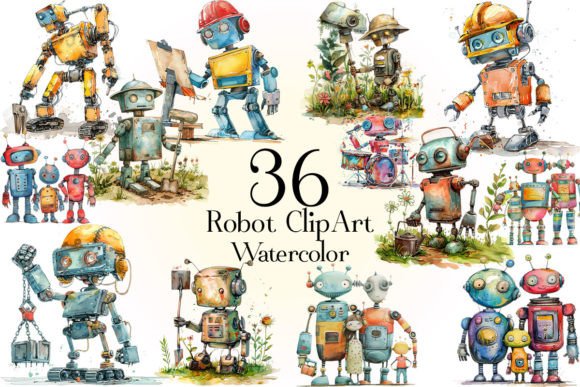
Watercolor Robot Clipart for Creative Design Work
There is something genuinely refreshing about a robot rendered in soft watercolor washes rather than cold vector lines. Watercolor Robot Clipart brings together two worlds that rarely meet: the mechanical, precise nature of robotics and the loose, unpredictable charm of hand-painted art. The result is a design asset that feels approachable, warm, and surprisingly versatile. Whether you are building a brand identity for a children's coding kit or designing packaging for a niche robotics subscription box, this style of clipart offers a visual language that stands apart from standard tech imagery.
What Makes Watercolor Robot Clipart Visually Distinct
At first glance, these illustrations capture the familiar shapes of robots—geometric heads, jointed arms, antennae, and wheels—but the execution is anything but rigid. The watercolor effect introduces natural variation in opacity, edge softness, and color blending. One robot might have a cerulean blue body with uneven washes that pool slightly at the edges, while another uses warm amber tones with subtle splatters that add texture. This unpredictability is precisely what gives the clipart its personality. It feels handmade, even when used in a digital layout.
The robots themselves typically range from friendly and whimsical to slightly retro or abstract. You will find designs with round glowing eyes, expressive postures, and playful accessories like gears or tools. The watercolor style softens what could otherwise feel clinical or intimidating. For adults who remember animatronic characters from childhood or enjoy the current nostalgia wave around vintage sci-fi, these illustrations tap into a sense of familiarity without feeling dated. The palette often includes pastels, muted primaries, and earthy accents, which makes them easy to integrate into both print and digital projects without clashing with other design elements.
Where This Clipart Shines Across Real Projects
Watercolor Robot Clipart is not a one-trick asset. Its applications stretch across several creative and commercial contexts, and understanding where it performs best saves you time and trial-and-error.
Branding for Tech and Education Products
If you are developing a brand for a STEM toy, an educational app, or a kid-friendly coding platform, the watercolor robot aesthetic communicates approachability. Parents and educators respond well to visuals that feel creative rather than overly digital. Using this clipart on packaging, website headers, or instructional materials signals that the product values imagination alongside technical skills. The soft texture of the illustrations balances the perceived hardness of technology, making the brand feel more human.
Editorial Design and Publishing
Magazines, newsletters, and blogs covering technology, innovation, or parenting often struggle to find imagery that is not stock photography or generic icons. Watercolor Robot Clipart fills that gap neatly. It works as a featured illustration for articles about automation, artificial intelligence, or children's media. The visual style adds a layer of editorial personality without distracting from the text. Because the colors are often muted or pastel, the clipart integrates well with both serif and sans serif typefaces in layouts. It supports readability by providing visual breaks that are coherent with the topic rather than unrelated decorative elements.
Social Media Graphics and Content Marketing
Marketers and content creators know that standing out in a feed requires consistent visual identity. Watercolor Robot Clipart provides a recognizable motif that can be repeated across Instagram posts, Pinterest pins, LinkedIn articles, and email headers. The hand-painted quality feels authentic, which aligns with current audience preferences for less polished, more genuine brand content. A series of posts featuring the same robot character in different poses or contexts builds recognition over time. It becomes a visual shorthand for your brand's voice.
Packaging and Product Labels
Small-batch products, especially those targeting creative professionals or parents, benefit from packaging that looks curated rather than mass-produced. Watercolor Robot Clipart printed on labels, boxes, or hang tags adds a tactile, artisan feel. This is particularly effective for subscription boxes, indie toy lines, or stationery products where the unboxing experience matters. The clipart suggests care and craftsmanship, which supports premium positioning at a reasonable production cost.
Personal and Hobby Projects
Crafters, scrapbookers, and hobbyists also find value here. The clipart works well for party invitations, classroom decorations, personalized gifts, and digital planners. Because the watercolor style is forgiving and organic, it pairs naturally with handwritten fonts, paper textures, and mixed-media layouts. It allows non-designers to achieve a professional look without needing advanced illustration skills.
How Clipart Style Influences Brand Perception and Audience Engagement
Visual assets do more than decorate a page. They shape how an audience perceives a brand's credibility, warmth, and attention to detail. Watercolor Robot Clipart, specifically, communicates a few things at once. It says the brand is creative enough to step away from sterile stock imagery. It suggests a focus on craftsmanship and originality. And because the robot theme is inherently tied to technology, it signals relevance to modern tools and thinking.
For audience engagement, the style invites closer looking. A flat vector robot might be scanned and forgotten. A watercolor robot with visible brush texture and subtle color variation encourages the viewer to pause. That extra second of attention matters in crowded digital environments. The emotional tone also plays a role. The softness of watercolor reduces the intimidation factor of tech topics, making content more accessible to general audiences. Readers are more likely to click through, share, or comment on content that feels visually inviting rather than cold or overly corporate.
Choosing the Right Watercolor Robot Clipart for Your Project
Not every clipart set labeled watercolor robot will suit your specific needs. Evaluating a few practical factors before purchasing or downloading saves frustration and ensures consistent results across your deliverables.
Assessing Style Consistency and Coverage
Look at the range of robots included. Does the set offer multiple poses, expressions, or angles? A single robot illustration limits flexibility. A set with at least ten to twenty variations gives you room to build a visual system. Also check whether the robots share a consistent color palette and brush technique. Mismatched styles within the same set become obvious once placed side by side in a layout.
Readability and Scale Considerations
Watercolor textures can lose definition when scaled down significantly. If you plan to use the clipart in small social media icons or on business cards, test how the illustrations hold at those sizes. Sets with clearer outlines or slightly higher contrast between the robot and background elements tend to perform better at smaller scales. For large format uses like posters or website hero sections, you have more flexibility with softer, looser washes.
File Formats and Design Software Compatibility
Practical workflow matters. Check whether the clipart is provided in PNG with transparent backgrounds, SVG for scalability, or layered PSD files. Transparent PNGs are the most universally useful across web design, social media, and print layouts. If you work in publishing or editorial design, EPS or AI formats may be necessary for high-resolution output. Knowing your software environment ahead of time prevents compatibility headaches.
Commercial Licensing and Usage Rights
This is the area where many small business owners and creators get caught. Always review the commercial license before purchasing. Some clipart sets allow unlimited commercial use, including merchandise and branding. Others restrict usage to personal projects or limit the number of products you can produce. If you are a marketer or entrepreneur building a brand, look for a license that explicitly covers logo use, packaging, and promotional materials. A premium font or design asset with proper licensing is an investment in your business's legal safety, not just aesthetics.
Pairing Watercolor Robot Clipart with Other Design Elements
The clipart does not work in isolation. How you pair it with typography, layout, and color determines whether the final piece feels cohesive or chaotic.
For typography, a clean sans serif like a geometric or humanist style balances the organic texture of the watercolor robots. Avoid pairing with heavily distressed or grunge fonts unless you are deliberately aiming for a chaotic collage look. For editorial projects, a neutral serif body font with the robot used as a drop cap or section marker creates a sophisticated contrast. The key is to let the clipart carry the personality while the typography provides structure and readability.
Color strategy matters too. Pull accent colors directly from the watercolor palette used in the robots. If the clipart features soft teal, rose, and mustard tones, use those as accent colors in your headings, buttons, or borders. This creates a unified visual system without requiring every element to match perfectly. The natural variation in watercolor means slight color differences across assets are expected, so do not overcorrect by forcing exact hex codes everywhere.
For layout, give the robots room to breathe. Watercolor edges are soft, so placing them too close to text or other graphics can create muddy overlapping areas. Use generous padding or place them on white or very light backgrounds to preserve the integrity of the wash effect. In editorial design, full-page robot illustrations with minimal text overlay produce strong visual impact without competing elements.
Practical Recommendations for Designers and Content Creators
If you are considering Watercolor Robot Clipart for a current project, start by defining the role the illustrations will play. Will they be the primary visual identity or supporting accents? For branding, I recommend selecting two or three robot variations to use consistently across touchpoints rather than using every illustration in the set. Repetition builds recognition. For marketing campaigns, rotate between different robot poses to keep content fresh while maintaining a consistent style.
Test the clipart in context before committing to a full rollout. Place a robot on your website mockup, in a social media template, and on a product label mockup. See how it interacts with your existing design assets. Sometimes an illustration that looks charming on its own feels off in a specific layout. Adjust opacity, size, or positioning as needed. Because watercolor clipart has a soft texture, it often works well as a background element at reduced opacity with text overlaid, or as a hero image with minimal accompanying graphics.
Finally, remember that the best design assets are the ones that solve a real visual problem. Watercolor Robot Clipart solves the problem of making technology feel human, approachable, and creative. It gives you a distinctive look without requiring custom illustration work. When chosen thoughtfully and paired with clean typography and intentional layout, it elevates projects from generic to memorable. Whether you are designing for a startup, a classroom, or your own creative business, the warmth and personality of these robots can help your audience connect with your message in a way that cold vector art never will.