Safari Animals Watercolor Illustration: A Creative Asset That Brings the Wild to Design
There is something immediately disarming about a design that mixes the raw energy of the wild with the soft, unpredictable flow of watercolor. Safari Animals Watercolor Illustration captures exactly that tension. It is not just a collection of painted animals—it is a visual language that feels both untamed and delicate, bold yet approachable. For designers, content creators, and brand strategists working across digital and print, this type of asset offers a rare combination of personality and versatility. Whether you are building a children’s book layout, crafting social media templates for an eco-lodge, or designing packaging for a natural skincare line, this illustration style brings a warmth that vector art often struggles to replicate. The watercolor effect introduces subtle texture variations, soft edges, and organic color gradients that make every piece feel handcrafted. That handmade quality matters more than ever in a design landscape saturated with sterile, mass-produced visuals.
Visual Personality and What Makes It Stand Out
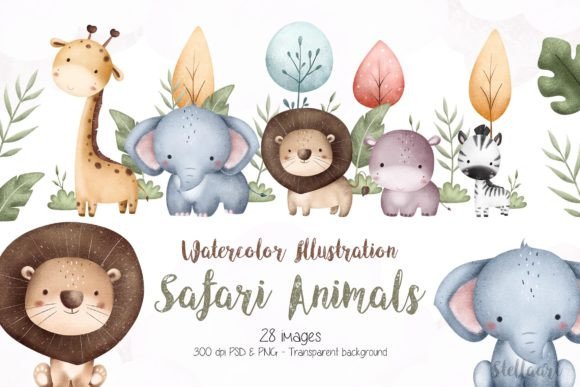
Safari Animals Watercolor Illustration is defined by its loose, painterly approach. Think of the difference between a sharp photograph and a memory—this style lives in that softer space. The animals are recognizable, but they are rendered with the kind of atmospheric bleed that watercolor is known for. Giraffes appear with gentle washes of amber and ochre. Elephants carry subtle blue-gray shadows that suggest dusk on the savanna. Lions are not aggressive or hyper-detailed; instead, they feel almost dreamlike, with manes that dissolve into pools of color. This is not hyperrealism. It is interpretive illustration that prioritizes mood over precision. And that mood is exactly what makes it work for so many applications. It feels nostalgic without being dated, playful without being childish, and artistic without feeling precious. For brands and creators who want to signal authenticity, warmth, and a connection to nature, this style does that work visually without needing a single word.
Where This Style Works Best Across Projects
The real strength of Safari Animals Watercolor Illustration is its adaptability. It is a display-oriented asset, meaning it thrives when given space to breathe. In editorial design, it works beautifully as a full-page spread or as a hero element on a chapter opener. For web design, it can anchor a landing page hero section, especially for brands in the travel, education, or wellness space. Social media graphics benefit from the organic feel—a watercolor elephant behind a quote about conservation or mindfulness immediately elevates the post beyond standard stock imagery. Packaging design is another strong fit. Products aimed at parents, educators, or nature lovers—think organic snacks, eco-friendly toys, or stationery—gain credibility when the visuals feel handmade rather than templated. For small business owners creating their own marketing materials, this illustration style provides a cohesive visual identity without requiring a full design studio. It can be paired with modern typography or a handwritten font to create a consistent brand language across business cards, brochures, and website headers.
Readability, Hierarchy, and Brand Perception
Let’s talk about how this type of illustration influences the way people read and interact with your content. Because Safari Animals Watercolor Illustration is inherently soft and textured, it works best when paired with clean, legible typography. A bold sans serif font or a simple serif font can anchor the visual hierarchy, letting the illustration carry the emotional weight while the type handles the information. This contrast is powerful. The watercolor elements draw the eye first—they become the entry point into the design. From there, the reader’s gaze moves naturally to headlines, then to body copy. When you use this style intentionally, you control the flow of attention. A half-page watercolor rhino on the left with crisp type on the right creates a balanced, professional composition. The brand perception shifts from “this looks nice” to “this feels thoughtful.” For marketers and publishers, that shift translates directly into engagement. Audiences linger longer on pages that feel curated and intentional. They associate the handmade quality with craftsmanship, which builds trust over time.
Choosing the Right Asset for Your Project
Not every watercolor illustration is created equal, and evaluating Safari Animals Watercolor Illustration for a specific project requires a practical eye. Start by considering the tone you need. If your brand is playful and youthful, look for illustrations with brighter washes and more exaggerated features. If you are targeting a premium or luxury audience, seek out pieces with restrained palettes and softer transitions. The same style can feel very different depending on color saturation and composition. Next, think about scale. Watercolor illustrations with fine details can lose impact when shrunk down for social media avatars or small product labels. Conversely, large, open washes of color can feel empty if blown up too much. Test the asset at the actual size it will appear. This is especially important for web design, where screen resolution and compression can flatten the subtle gradients that make watercolor so appealing.
Pairing and Licensing Considerations
Font pairing with an illustration-heavy asset like Safari Animals Watercolor Illustration deserves real attention. A modern typography approach works well—think geometric sans serif fonts or clean handwritten fonts that echo the organic lines of the watercolor. Avoid overly ornate script fonts that compete with the texture. You want the type to complement, not clash. A simple sans serif font like a rounded grotesk or a neutral serif font with good contrast can create a professional anchor. For logo design, consider using the illustration as a supporting element rather than the main mark—it can become a brand pattern or a secondary graphic that reinforces the primary logo. On the licensing side, always review the commercial terms. Some illustration packs allow unlimited use for print and digital, while others cap print runs or restrict resale. If you are a small business owner creating products for sale, confirm that commercial licensing covers your use case. A premium font or design asset is only valuable if you can use it freely across your marketing stack without worrying about legal surprises.
Practical Recommendations for Designers and Marketers
If you are integrating Safari Animals Watercolor Illustration into your workflow, start small. Use one or two pieces as accent elements rather than covering every surface. A single watercolor giraffe in the corner of a business card or as a subtle background texture on a website can be more effective than a full gallery of illustrations competing for attention. For bloggers and content creators, these illustrations work well as featured images for articles about travel, nature, parenting, or mindfulness. They add visual interest without overwhelming the text. For publishers creating children’s content or educational materials, the style supports storytelling without dictating the narrative. It leaves room for imagination. And for entrepreneurs building a brand identity from scratch, this illustration style can serve as the foundation for a cohesive visual system—carried through your website, packaging, social media, and print collateral. Consistency across those channels builds recognition. That recognition, combined with the warmth of the watercolor aesthetic, creates a brand that feels both professional and personal. That is a combination that resonates deeply with modern audiences looking for authenticity in every visual touchpoint.