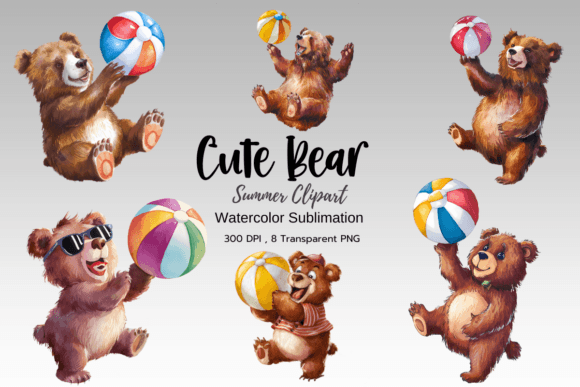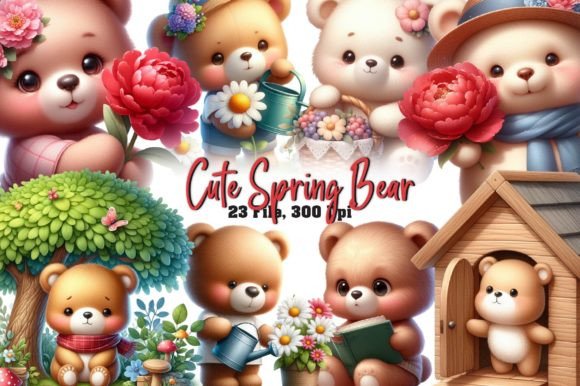
Cute Spring Bear Watercolor Clipart for Design Projects
There’s something about a watercolor bear that feels genuinely inviting. Unlike sharp vector icons or sterile stock photos, a cute spring bear watercolor clipart in PNG format brings a soft, hand-painted warmth to any project. Whether you’re working on a kid’s book layout, a small business brand kit, or social media graphics for a spring campaign, this type of design asset offers a blend of charm and versatility that’s hard to replicate with other styles. The painted edges, subtle color bleeds, and organic texture immediately signal that your work was crafted with care, not just assembled from generic templates.
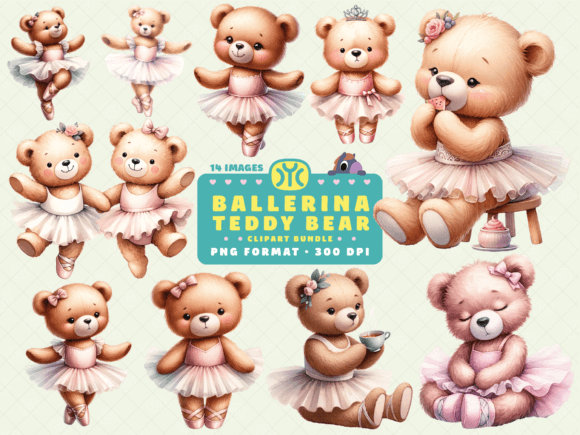
What makes this clipart stand out is its personality. The bear is often depicted in playful poses—holding a flower, sitting among blooms, or peeking from behind a cluster of leaves. The watercolor technique adds a dreamy, gentle feel, with colors that blend into one another like a spring morning. Pastel pinks, soft greens, and warm yellows dominate the palette, but you’ll also find touches of lavender or sky blue that keep the composition fresh. This isn’t hyper-detailed realism; it’s an accessible, friendly style that works beautifully across age groups and settings.
Why Designers and Small Business Owners Choose This Type of Asset
From a practical standpoint, a cute spring bear watercolor clipart in PNG gives you flexibility. The transparent background means you can drop it onto any surface—a greeting card, a website hero image, or a product label—without dealing with awkward white boxes. You can layer it over patterns, text, or other illustrations. For someone managing a brand on a tight budget, that ease of use saves hours of editing time. For a crafter designing a printable planner sticker, it means you can position the bear exactly where you want it, resize without losing quality, and maintain that watercolor texture throughout.
I’ve seen this clipart used effectively in subscription box inserts, seasonal banners, and even logo variations for eco-friendly brands. The soft style pairs well with modern typography—think clean sans serif fonts or rounded script fonts—without clashing. It also compliments a more rustic or handmade brand identity, where the watercolor finish reinforces the idea of natural, thoughtful production. The key is that this asset doesn’t try to be everything; it stays in its lane as a friendly, approachable visual element that people connect with emotionally.
Visual Characteristics That Build Emotional Connection
The watercolor process creates subtle imperfections—a slight blur here, a pigment granulation there—that make the bear feel alive. In design terms, that organic quality helps counterbalance the rigidity of digital layouts. When you place a cute spring bear watercolor clipart on a page, you introduce a tactile, human element. This is especially effective in editorial design for children’s content, where the goal is to create a sense of wonder. The bear becomes a character, not just an illustration. That character can guide a reader’s eye through the page, establish a visual hierarchy, or anchor a composition with its gentle presence.
Color is another strong factor. These clipart sets are often curated with spring in mind, so the hues lean toward soft, harmonious tones. You won’t find harsh neons or muddy browns. Instead, the palette feels like a curated collection of watercolor washes. This makes it easier to integrate into existing brand schemes. If your brand uses pastel tones, you can place the bear directly into your design system. If your brand is more muted, the clipart can serve as an accent piece that draws attention without overwhelming.
Where Cute Spring Bear Watercolor Clipart Shines in Professional Work
If you’re a content creator or blogger, think about how you farewell winter and welcome spring. A cute spring bear watercolor clipart can act as the focal point of a seasonal email header, a Pinterest pin, or the cover image for a blog post about gardening or DIY projects. The bear’s gentle expression invites readers to click, and the watercolor style suggests a handmade, authentic quality that resonates with audiences looking for inspiration rather than hard sells.
- Social media graphics: Use the bear in Instagram stories, Facebook banners, or TikTok thumbnails. The soft edges make it stand out against solid backgrounds.
- Packaging design: Whether you’re selling artisanal soaps, organic tea, or handmade cards, a watercolor bear adds a whimsical touch that feels premium without being stuffy.
- Editorial and publishing: Children’s books, magazines, and ebooks benefit from the bear’s narrative potential. Place it near a headline or pull quote to guide the reader’s eye.
- Brand identity: Small businesses that focus on nature, family, or wellness can use this clipart as a mascot or accent element. It’s approachable enough for a local brand but crafted enough to look professional.
- Print projects: Invitations, stationery, and scrapbooking pages all come alive with this style. The watercolor texture translates well to paper, retaining its soft, painterly quality.
Readability and Visual Hierarchy Considerations
One question I often hear is whether watercolor clipart interferes with readability. The short answer is no—if you use it thoughtfully. Because a cute spring bear watercolor clipart has diffuse edges and muted contrast, it typically sits behind or beside text without competing. You want to avoid placing it directly behind small body copy, but for headings, callouts, or short paragraphs, it works beautifully. In fact, it can enhance readability by breaking up dense blocks of text and creating breathing room. The bear acts as a visual entry point, offering the reader a moment of rest before they move to the next section.
For digital projects, such as web design or email layouts, consider the file size of the PNG. A well-optimized watercolor clipart should load quickly while retaining its texture. If you’re using it as a background element, keep the opacity low so it doesn’t dominate. If it’s a focal point, let it occupy its own space with sufficient padding. These small decisions maintain visual hierarchy and ensure the clipart supports your message rather than distracting from it.
Practical Guidance for Selecting and Using This Design Asset
Not every cute spring bear watercolor clipart is created equal. Some sets offer multiple poses, color variations, and both PNG and SVG files. Others might include only a single bear with limited expression. When evaluating a pack, look for high-resolution files—at least 300 DPI for print, and 72 DPI with generous dimensions for digital use. A good set will also include transparent and white-background options, plus a few compositionally varied poses so you don’t feel stuck with the same image across every page.
Think about your project’s tone. If you’re designing for a children’s party invitation, a bear holding a balloon might be ideal. For a spring brand refresh, a bear surrounded by flowers or butterflies could signal growth and renewal. The best clipart sets include enough range that you can build a cohesive story around the character. And because it’s watercolor, the bear can pair nicely with other watercolor elements—florals, splashes, or geometric shapes—to create a complete scene.
Font Pairing and Composition
Because the watercolor style is decorative, you want text that complements without competing. Modern typography works well: a rounded sans serif font like a soft geometric or a hand-lettered script font can echo the organic feel. Avoid overly strict serif fonts or heavy display faces that might overwhelm the bear’s delicate lines. Instead, go for a font that has a bit of character—maybe a handwritten font that feels like it was drawn alongside the bear. This consistency in style makes your design feel cohesive and intentional.
For example, a cute spring bear watercolor clipart used on a greeting card could sit beneath a script heading saying “Hello Spring,” with a tiny sans serif subhead for the date. That combination uses the bear as the visual anchor, the script font for emotional tone, and the sans serif for clarity. It’s a simple hierarchy that works every time.
Licensing and Commercial Use
Before you download any set, check the licensing terms. Many cute spring bear watercolor clipart packs are sold under standard commercial licenses, meaning you can use them in products, marketing materials, and client projects. But restrictions vary: some licenses limit the number of copies or exclude resale of the digital files themselves. If you’re a designer working on multiple client projects, a royalty-free license with unlimited use is your best bet. Always read the terms to avoid surprises later, especially if you’re publishing an ebook or selling merch that features the clipart prominently.
I also recommend verifying whether the clipart includes elements you can edit. Some vendors provide layered PNG files, which let you isolate parts of the bear or adjust colors in Photoshop. Others offer flat images with locked transparency. For maximum flexibility, choose files that give you room to resize, rotate, and combine without degrading quality. The time you invest in sourcing well-made assets pays off in the consistency and polish of your final output.
Making the Clipart Work for Brand Perception and Engagement
When used consistently, a cute spring bear watercolor clipart becomes a recognizable part of your brand vocabulary. It signals that your brand values gentleness, creativity, and attention to detail. Audiences pick up on these cues subconsciously. A blogger who uses the same bear across seasonal posts builds a visual signature that readers come to expect. A small business that places the bear on packaging, social media, and in-store signage creates a cohesive identity that feels established, even if the brand is new.
The engagement benefit is real. Watercolor visuals often see higher click-through rates and longer dwell times because they feel less aggressive and more story-like. In an online space full of high-contrast ads and loud graphics, a soft, beautiful bear stands out by being quiet. It invites interaction rather than demanding attention. That’s a subtle but powerful advantage for marketers and content creators who want to build trust over time.
If you’re still on the fence, try integrating one piece of cute spring bear watercolor clipart into a current project. Use it as a small accent on a landing page, a sidebar icon, or a thank-you card image. Notice how the tone shifts. You’ll likely find that the bear doesn’t just decorate—it communicates warmth, approachability, and a sense of handmade quality that resonates with almost every audience. That’s the kind of design asset that earns its place in your toolkit, project after project.