Blue Flax Watercolor Clipart
There is something quietly confident about wildflowers rendered in watercolor. The medium softens edges, invites light, and captures movement in a way that vector art often cannot. Blue Flax Watercolor Clipart brings that botanical delicacy into a practical, commercially usable format. It is not just a set of images; it is a design asset that carries the personality of hand-painted originals while offering the flexibility of digital cutouts. For anyone building brand identities, crafting editorial layouts, or refreshing social media visuals, this clipart collection presents an opportunity to introduce organic warmth without sacrificing professional polish.
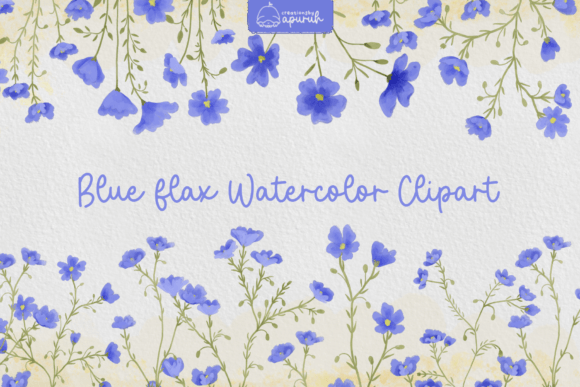
The visual character of this set is rooted in the natural elegance of flax blossoms. The petals lean toward a soft, periwinkle blue, sometimes deepening into indigo at the centers, with subtle yellow stamens adding contrast. The watercolor treatment gives each bloom a slightly varied density—some strokes are bold and saturated, others fade into translucent washes. This variation is not a flaw; it is the point. Unlike rigid vector icons, these clipart elements carry the unpredictability of real paint, which makes them feel alive. Stems curve gently, leaves taper naturally, and occasional splatter effects or pigment granulation add texture that photographs and flat illustrations rarely replicate. The overall personality is calm, natural, and slightly airy—aesthetic qualities that suit both minimalist and boho-leaning designs.
Where Blue Flax Watercolor Clipart Elevates Creative Work
The versatility of this clipart set becomes clear once you start testing it across different mediums. In brand identity work, small businesses—especially those in wellness, botanical skincare, organic food, or lifestyle coaching—can use these blossoms as accent graphics on packaging, stationery, or website headers. A single flax stem positioned next to a logotype can communicate a natural, handcrafted ethos more effectively than any stock photo ever could. For packaging design, the clipart works beautifully when layered over kraft paper backgrounds or soft cream tones, reinforcing a sustainable, artisanal impression.
In editorial design, these watercolor elements serve as chapter openers, pull-quote accents, or marginal embellishments. Magazines, blogs, and newsletters focused on gardening, slow living, or mindfulness benefit from the botanical motif without requiring a full custom illustration budget. Similarly, social media graphics for platforms like Instagram and Pinterest can use the clipart to frame quotes, separate content blocks, or create cohesive feed aesthetics. The soft blue palette pairs well with neutral tones, muted greens, and warm beiges, making it easy to integrate into existing color systems.
Print applications are equally strong. Wedding invitation suites, save-the-date cards, and botanical wall art prints are natural fits. The watercolor texture holds up well in print, especially when printed on textured paper stocks that complement the painted look. Digital planners, journal templates, and note-taking apps also benefit from the clipart as decorative elements that feel handmade rather than mechanical. For web design, these assets can function as hero section backgrounds, divider elements, or hover-state decorations when used discreetly and optimized correctly.
How This Clipart Influences Readability, Hierarchy, and Brand Perception
Clipart often gets dismissed as decorative fluff, but strategically placed botanical elements actually shape how an audience interacts with your content. When you place a Blue Flax Watercolor Clipart element at the start of a section, it acts as a visual anchor that guides the eye downward. This subtle cue improves visual hierarchy without needing bold typography or heavy borders. The soft edges and semi-transparent washes keep the clipart receding into the background, allowing text to remain the focal point while still benefiting from the contextual warmth the florals provide.
From a brand perception standpoint, the choice of hand-painted clipart over standard vector icons signals care. It suggests that the brand values texture, authenticity, and a certain unhurried quality. In a digital landscape saturated with flat designs and AI-generated imagery, real watercolor elements stand out precisely because they look like someone touched them. That tactile association builds recognition over time. Audiences begin to associate the soft blue palette and organic shapes with your brand's voice, which deepens engagement and loyalty. Consistency matters too. Using the same clipart set across a website, product labels, email headers, and social posts creates a unified visual language that feels intentional rather than haphazard.
Professionalism in design does not always mean sterility. A clean, well-structured layout can coexist with organic elements. The key is restraint. One well-placed flax stem often communicates more than a dozen scattered blossoms. When you treat clipart as a considered typographic or compositional element—similar to how you would treat a display font or a serif font heading—it elevates the entire piece. The clipart becomes part of the modern typography ecosystem, working alongside your chosen typeface to create rhythm and breathing space.
Choosing and Using Blue Flax Watercolor Clipart Effectively
Before integrating any design asset into a project, it pays to evaluate fit. Start by asking what emotional tone the project requires. If the answer leans toward calm, natural, gentle, or organic, then this clipart set is likely a strong match. If the project demands high-energy, industrial, or ultra-modern aesthetics, watercolor florals may feel out of place unless used ironically or as a deliberate contrast. Understanding project fit is essential because even beautiful assets can detract when used in the wrong context.
Testing font pairings alongside the clipart yields better results than treating them as separate decisions. A handwritten or script font can echo the fluid lines of the watercolor stems, creating a harmonious, lyrical feel. A clean sans serif font provides contrast, letting the clipart carry the decorative weight while the typography grounds the layout. For more formal projects—like an editorial spread or a premium product catalog—a refined serif font pairs beautifully with the botanical theme, adding a classic, literary undertone. Experiment with scale: reducing the clipart to a small accent lets it act like a subtle watermark, while enlarging it to fill a background turns it into a bold pattern element.
Review the included styles and file formats carefully. High-resolution PNG files with transparent backgrounds are the most versatile, especially for digital work. If you plan to print at large sizes, ensure the clipart retains quality at scale. Some watercolor sets include individual blossoms, stems, wreaths, and bouquets—having a range of compositions allows you to mix and match without repeating the same element too often. Avoid the temptation to use every piece in one layout. Curate selectively, just as you would edit a commercial font to include only the weights and styles that serve the project.
Readability considerations may seem unrelated to clipart, but they matter. When placing text over or near watercolor elements, check contrast levels. Light blue washes on white backgrounds rarely cause legibility issues, but darker, more saturated blooms placed behind body text may create visual noise. In those cases, reduce opacity, blur the clipart slightly, or position it away from dense text blocks. The goal is to let the clipart enhance, not compete.
Finally, review the commercial licensing terms before using the clipart in products for sale. Most reputable clipart sets include a standard license that covers personal use and commercial projects up to a certain sales volume. If you are a small business owner producing merchandise, print-on-demand products, or digital downloads, confirm whether extended licensing is required. Understanding the legal side early prevents headaches later and lets you use the asset with full confidence.
Practical Recommendations from a Designer's Perspective
If you are new to working with watercolor clipart, start small. Pick one project—maybe a single social media template or a product label—and integrate the clipart as a secondary element. See how it interacts with your existing brand identity materials. Notice whether clients or followers respond differently to layouts that include the floral accents versus those that do not. Often, the feedback is subtle: more saves on Pinterest, slightly longer dwell times on web pages, or spontaneous comments about the design feeling "warm." Those signals confirm that the asset is doing its job.
For designers working across multiple client projects, this clipart set can serve as a reliable base for mood boards, style guides, and early concept explorations. Presenting a client with watercolor florals alongside a premium font choice and a color palette helps them visualize the final direction without needing custom illustration work upfront. It saves time, reduces revision cycles, and keeps the creative process focused on composition and message rather than asset creation.
Watercolor clipart is not a replacement for original commissioned artwork, nor should it be. But for the vast majority of real-world projects—where budgets, timelines, and scope demand efficiency—it offers an honest, beautiful shortcut. Blue Flax Watercolor Clipart provides that rare combination of artistic authenticity and practical usability. When used with intention, it transforms ordinary layouts into something people want to look at a little longer. And in a crowded content landscape, that extra moment of attention is exactly what every designer and brand is after.